
By Richard Gray
The destabilization of the Strait of Hormuz has cast a long shadow over the balance sheets and capital flows of sovereigns. Despite mounting deficits and contracting economies, the momentum of the Gulf’s sovereign wealth funds has not yet been blunted. In 2026, Gulf funds are projected to invest a record-breaking $136 billion, approximately three times the amount they invested in 2020.
For the developing economies looking to Gulf investment for industrial upgrading, a continued reduction in the energy and commodities trade into 2027 would challenge their economic ambitions and the commercial interweaving of the Gulf and Asia-Pacific.
Gulf Fiscal Pressures
In 2026, the economies of Qatar, Kuwait, the United Arab Emirates (UAE), and Saudi Arabia are all expected to contract, with double-digit downturns in Qatar and Kuwait. Current growth projections for 2027 indicate a rebound; such figures, however, require a resumption of trade through Hormuz.
The slowing of the Gulf economies has created a precarious fiscal environment. The UAE is expected to weather through 2026 with a relatively minimal deficit of 1.3% of GDP. Other Gulf states have much greater fiscal exposure. Saudi Arabia’s deficit is likely to be $65 billion in 2026, or 4.9% of GDP. Qatar projected a $6 billion deficit for 2026, but it stood at $5.8 billion in the first half of 2026 alone; Kuwait’s deficit is projected to be $31.3 billion.
In light of geopolitical volatility and weaponized interdependence, sovereign vehicles are maintaining their volume to accelerate economic diversification, counterbalance impending fiscal pressures, and identify additive growth engines. As stated by Mohsin Pirzada, Head of Funds at Qatar Investment Authority, the war with Iran “hasn’t impacted [the fund’s progress] … we continue to invest, we continue to deploy.”
Across the Gulf’s funds, these deployments are emphasizing domestic projects and the attraction of foreign capital. Domestic financing operates through loans and new portfolios. In September 2026, Kuwait amended the rules governing its Future Generations Fund by decree to allow the government to borrow from the fund. The loans are to be repaid once the budget returns to surplus.
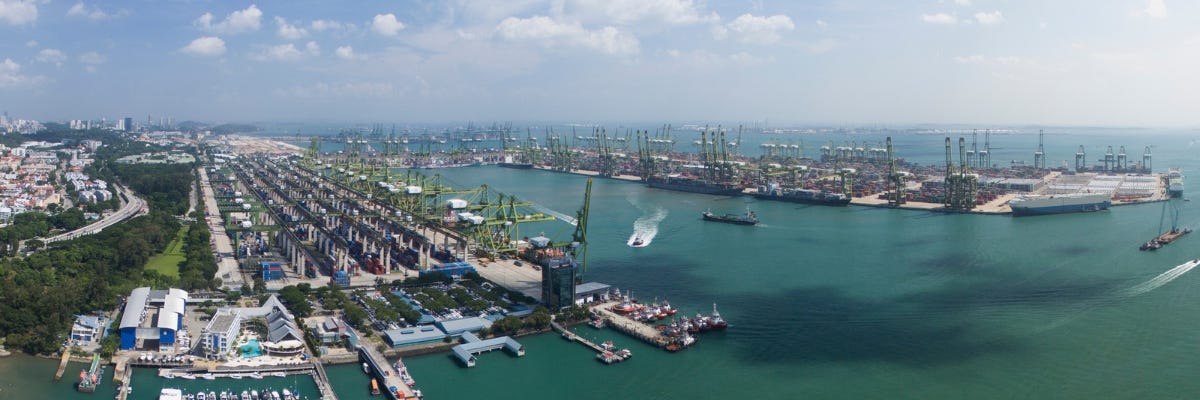
Abu Dhabi’s L’IMAD is taking Abu Dhabi Ports private and reportedly investing billions into new port infrastructure to bypass the Strait of Hormuz. The Qatar Investment Authority, meanwhile, is earmarking approximately one third of the $580 billion fund for domestic investments to incubate new national champions and to “[drive] Qatar’s economic growth.”
The attraction of capital is reinforced by interest in rebuilding energy capacity, establishing co-financing platforms, and leveraging of outbound capital flows. Saudi Arabia Public Investment Fund’s 2026-2030 Strategy aims to bring durable value to a diversifying Saudi economy, with Governor Yasir Al-Rumayyan committed to foreign investment and appealing to “the whole world to come and invest in Saudi.” Alongside KKR, Blackstone, and Brookfield, the state-owned Kuwait Oil Company established a joint venture, $16 billion Kuwaiti crude pipeline network.
Gulf Capital Abroad
Taken together, Gulf sovereign capital remains in line with global sovereign flows. Nearly half of the Gulf funds’ outbound investments have been directed to the United States, mirroring the 48% of global state-owned investments that went to the U.S.
However, the breakdown varies significantly by sovereign fund. Since the initiation of the war in Iran, the Public Investment Fund and Abu Dhabi Investment Authority have invested twice as much in emerging markets as in developed markets, while nearly all Mubadala and Qatar Investment Authority’s investments in this period have been in developed markets. L’IMAD’s investments were split nearly evenly between developed-emerging markets.
These five funds, taken together, invested $25.4 billion from February through May, with $11 billion allocated to emerging markets.
The direction of travel may shift, with developed-market oriented Mubadala executing a strategic pivot to Asia. With Singaporean Temasek launching offices in Abu Dhabi and Riyadh, the Asia-Gulf interlinking may be bidirectional. Temasek Chief Executive Dilhan Pillay noted the Gulf’s “highly attractive” fundamentals and need for “very large capital” to rebuild infrastructure. Asia, conversely, is positioned at the cutting edge of high technology production and manufacturing, with a long-standing interest in maintaining access to Gulf oil for domestic consumption, production, and the maturation of its petrochemical industry.
Currently, Gulf investments may serve as a buffer amidst regional strife, but the maintenance of regional warfare may give way to weaker returns, greater demand for domestic investments, and a reduction of state-allocated funds.
Global Investment Concentration
Amidst these pressures for less risky investments, high capital expenditure in the AI space is producing a narrow set of winners in terms of capital inflows. Investments are increasingly tied to semiconductors, digital infrastructure, and artificial intelligence, with inbound investments to developed economies receiving a greater share of the increase.
Among the greatest winners of this pivot were the economies of developing Asia, accounting for 40% of global foreign direct investment (FDI) and more than 70% of the total share to developing economies. According to UNCTAD, one of the starkest developments was the uptick in inbound capital to Southeast Asia, now the subregion with the most investments in Asia.
Fewer Financing Options
Outside of the target markets of the G7+ and emerging Asia, these narrowed investment portfolios across markets and sectors could limit future industrial growth. While FDI rose 6% in 2025, it was highly uneven with upticks in Latin America and downturns in Africa.
Greenfield investments are significantly down from peaks in 2023 among emerging and developing economies, with most of the downturn occurring in a reduction in greenfield manufacturing projects. In advanced economies, meanwhile, overall and manufacturing greenfield projects are at all-time highs.
Moreover, cuts in aid are reducing another source of capital for economies cut off from ongoing investment trends. Among the 17 largest Development Assistance Committee countries, foreign aid decreased 23.7%, from $205.5 billion in 2024 to $156.8 billion in 2025, with projections of additional budget cuts of 6.9% in 2026, bringing aid to its lowest level since 2014. Among the least developed countries, bilateral assistance will drop by 10.9%.
With Gulf capital in a period of transition and uncertainty, the narrowness of global FDI and reduction in aid are challenging countries’ development prospects. In this paradigm, access to capital may be entering a period of contraction, with fewer sources available and lower volumes of available funding. As the war in Iran leads to a contraction of the Gulf economies, Hormuz’s disruption may close yet another investment source. Developing economies would therefore need to use existing inbound flows more productively and sustainably.
Richard Gray is a researcher at the Center for Strategic and International Studies (CSIS), where he focuses on Asian geoeconomics and American economic statecraft and leads a forum that brings together 12 governments to discuss allied economic cooperation. He founded Pacific Polarity, an initiative on Indo-Pacific governance, interviewing ambassadors, ministers, and presidential advisors.
Section: (rihla-initiative) Photo: Wikimedia Commons
